



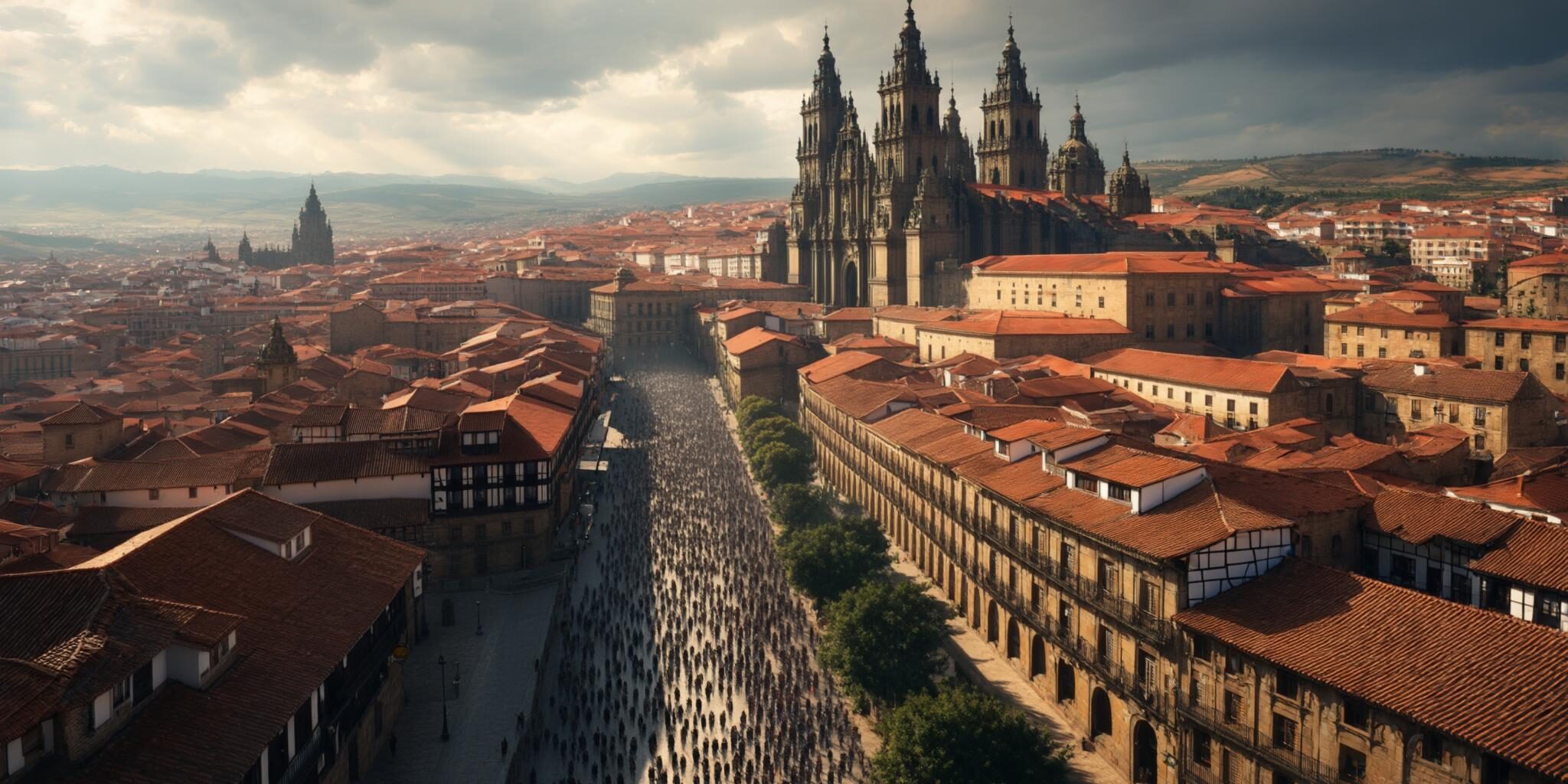
Santiago de Compostela is not just a city; it is the end of a transformative journey for thousands every year. To explore its streets and its famous cathedral is to immerse oneself in a tale of faith, history and humanity.
The origin of the Camino de Santiago
The Camino de Santiago has its roots in legend and tradition. As the story goes, the apostle St. James the Greater rests in what is now the grandiose Cathedral of Santiago. Since its discovery in the 9th century, this Galician city has attracted millions of pilgrims from all over the world.
Why do the Camino de Santiago
Beyond religion, the Camino offers an experience of introspection and connection with nature. It can be a physical and emotional challenge, but also an opportunity to overcome personal limits and find a new perspective on life.
The French Way vs. the Portuguese Way
The French Camino is perhaps the most traditional and crowded route, known for its rich history and stunning scenery in northern Spain. In contrast, the Portuguese Camino offers a somewhat quieter experience, with scenic coastlines and fewer crowds.
The Way of Saint James for beginners
For novices, the Camino can seem daunting. It is crucial to research and prepare adequately. Carrying the essentials, knowing the best times to travel, and understanding the common difficulties of the Camino are important steps to a rewarding experience.
When to do the Camino de Santiago
Spring and fall are ideal for avoiding the extreme summer heat and crowds. These seasons offer milder weather and vibrant scenery, although it is important to be prepared for the occasional rain.
What to take on the Camino de Santiago
Packing light is key. Essentials such as a good pair of hiking boots, comfortable clothing suitable for weather changes, a walking stick and essentials are a must. Don't forget a pilgrim's credential to access accommodations along the route.
Common difficulties and problems on the Camino
Although an enriching experience, the Camino is not without its challenges. Blisters, exhaustion and dehydration are common, but preventable with proper care and preparation.
Doing the Camino alone or in a group
Doing the Camino de Santiago alone offers precious time for personal reflection, while doing it in a group can provide moral support and make the experience more enjoyable. Both options have their merits and depend on the personal desires of each pilgrim.
Source: www.nationalgeographic.com